Introduction
Featured Snippet Priority:
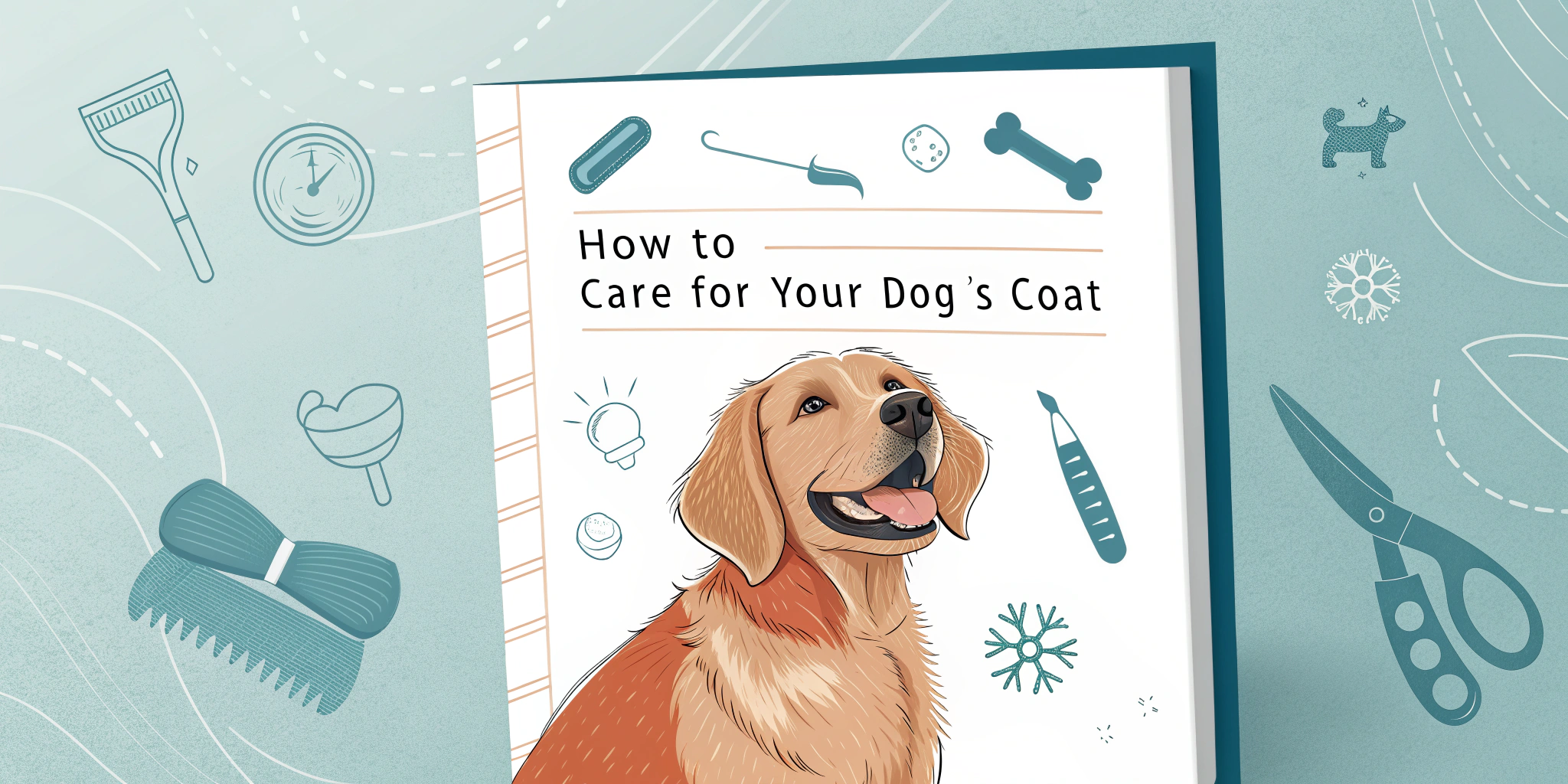
A dog’s coat is more than just a part of their appearance—it’s essential for their comfort and health. Whether your dog has a short, long, curly, or wiry coat, proper care and grooming are necessary to keep their fur clean, shiny, and healthy. Regular grooming helps prevent matting, reduces shedding, and promotes a shiny, healthy coat. In this guide, we’ll walk you through everything you need to know about caring for your dog’s coat, from brushing and bathing to dealing with specific coat types.
Why Dog Coat Care Matters
Why This Matters Now:
Dog coats aren’t just about looks—they play an important role in protecting your dog’s skin from the elements and regulating their body temperature. Regular grooming keeps the coat in top condition, preventing discomfort from tangles, mats, and skin irritations. Additionally, grooming sessions provide a perfect opportunity to check for parasites, dry skin, or other skin issues. Whether your dog has a long, thick coat or short, smooth fur, maintaining a healthy coat contributes to your dog’s overall well-being.
1. How Often Should You Groom Your Dog?
Short-haired dogs: Short-haired dogs usually require less maintenance, but they still need regular brushing, usually once a week, to remove loose hair and prevent shedding.
Long-haired dogs: Long-haired breeds need more frequent grooming, often every other day or once a week, to prevent matting and tangling.
Curly or wiry coats: Dogs with curly or wiry coats, such as Poodles or Schnauzers, need regular brushing to avoid mats and tangles, and may require professional grooming every few months.
General rule: Regardless of coat type, it’s important to brush your dog at least once a week to maintain a healthy coat and prevent any issues.
https://youtu.be/JCElN25Z95g
2. Choosing the Right Brush for Your Dog’s Coat
Slicker brushes: Ideal for long-haired and curly-coated dogs, slicker brushes remove tangles and mats without damaging the coat.
Bristle brushes: These work well for short-haired dogs and help remove loose hair and dirt while distributing natural oils in the coat for added shine.
Pin brushes: Perfect for medium to long-haired dogs, pin brushes gently detangle fur and remove loose hair.
Undercoat rakes: For dogs with double coats (e.g., Huskies, Golden Retrievers), undercoat rakes remove loose undercoat fur to prevent matting and shedding.
https://youtu.be/oJTGfriDQSA
3. How to Brush Your Dog’s Coat Properly
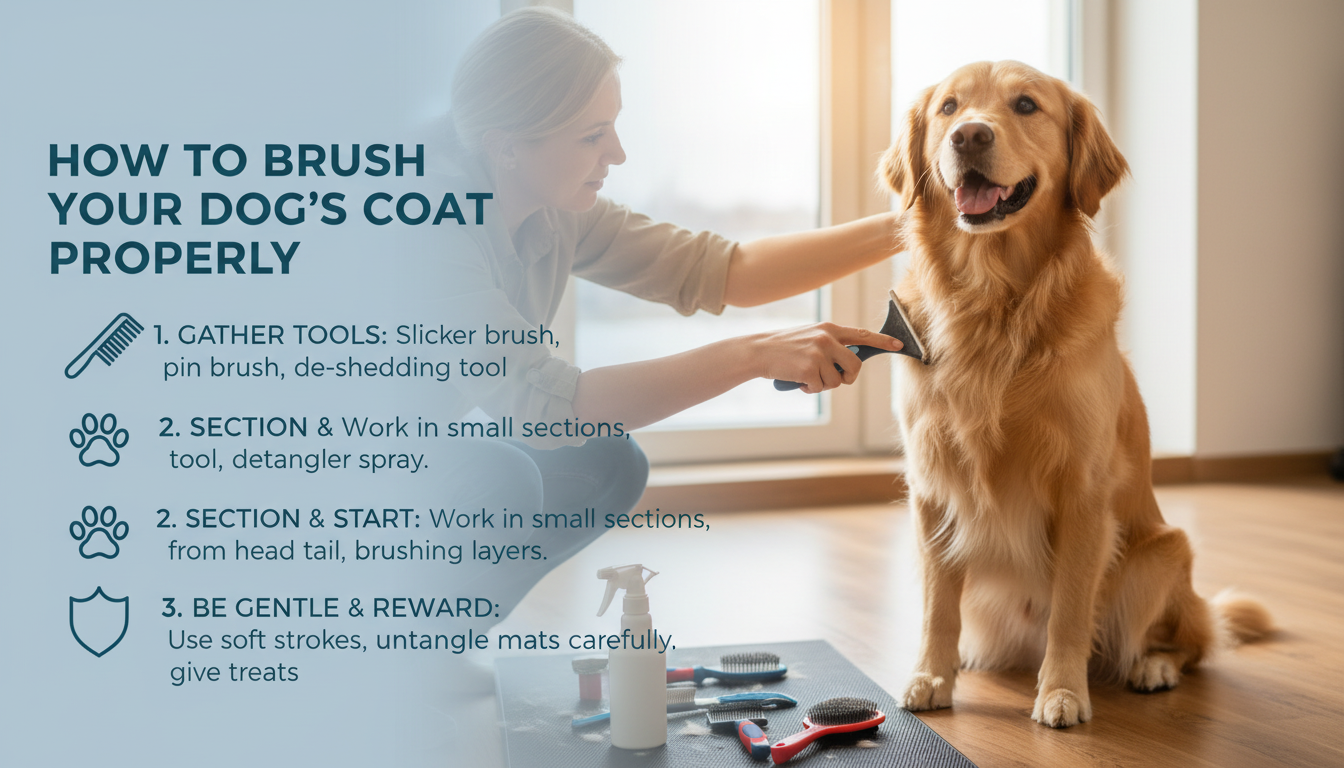
Start with the right tool: Choose the correct brush for your dog’s coat type and size. A slicker brush works best for tangles, while a bristle brush is ideal for short, smooth coats.
Be gentle: Start from the tips of the fur and gently work your way down to avoid pulling on knots or mats. Brush in the direction of the coat’s growth.
Brush in sections: Work in small sections, brushing each area thoroughly. Take your time with areas that tend to mat, such as behind the ears or under the legs.
Reward your dog: Praise and reward your dog with treats during and after grooming sessions to make the experience positive.
4. Bathing Your Dog: Tips for a Healthy Coat
How often to bathe your dog: Over-bathing can strip natural oils from your dog’s coat, leading to dryness and irritation. Generally, dogs should be bathed every 4–6 weeks, or as needed based on their activity level and coat condition.
Choose the right shampoo: Use a gentle, dog-specific shampoo that’s appropriate for your dog’s skin type. Avoid human shampoos, as they can be too harsh for your dog’s skin.
Proper rinsing: Ensure that all shampoo is thoroughly rinsed out to prevent residue buildup, which can lead to itching or irritation.
Drying your dog: After a bath, towel dry your dog, then use a blow dryer on a low, cool setting to dry their coat. Be sure to brush their coat while drying to prevent tangles.
5. Managing Shedding and Matting
Prevent matting: Regular brushing is key to preventing mats, especially in long-haired or curly-coated dogs. Be sure to brush the undercoat thoroughly and remove any tangles before they become mats.
Deshedding tools: If your dog sheds a lot, consider using a deshedding tool or undercoat rake to remove loose hair and prevent excessive shedding around the house.
Dealing with mats: If your dog’s coat has already become matted, use a mat comb or dematting tool to carefully work through the mats. If the mats are severe, consider taking your dog to a professional groomer for assistance.
Information Gain & Contrarian Analysis:
While regular brushing and bathing are essential, many pet owners overlook the importance of moisturizing the coat. In fact, many commercial dog shampoos can dry out the skin and coat, especially in dogs with sensitive skin. To combat this, consider using moisturizing conditioners or natural oils, such as coconut oil, to keep your dog’s coat soft and hydrated. Also, many owners believe that short-haired dogs don’t need as much grooming—but even short-haired dogs can benefit from regular brushing to remove dirt, dead skin cells, and loose hair.
Unique Section: Practical Insight from Experience: Grooming a Dog with a Long, Thick Coat
In my experience, dogs with thick, long coats (like Golden Retrievers or Pomeranians) require consistent grooming to avoid painful matting. I once worked with a Golden Retriever whose coat became severely matted after just a few weeks without brushing. I had to spend hours carefully working through each tangle and mat, but with regular brushing, the process became much easier. The key to managing a long coat is consistency—the more often you groom, the easier it will be to maintain a healthy, shiny coat without mats.
FAQ
How often should I bathe my dog to keep their coat healthy?
Bathe your dog every 4–6 weeks or as needed based on activity and coat type.
What’s the best type of brush for my dog’s coat?
The best brush depends on coat type: slicker brushes for curly/wiry coats, bristle brushes for short coats, and undercoat rakes for double coats.
How do I prevent my dog’s coat from matting?
Prevent matting by brushing regularly and keeping the coat clean and untangled.
Can I use human shampoo on my dog’s coat?
No, always use a dog-specific shampoo to avoid skin irritation.
How can I reduce shedding in my dog?
Reduce shedding with regular brushing, a healthy diet, and occasional baths.
What should I do if my dog’s coat becomes matted?
Carefully detangle mats with a dematting tool or seek professional grooming if severe.
How can I make grooming a positive experience for my dog?
Make grooming positive by using treats, praise, short sessions, and gentle handling.
Conclusion:
Caring for your dog’s coat is essential for their overall health and comfort. Regular brushing, proper bathing, and managing shedding and matting will help keep your dog’s coat shiny, healthy, and free of discomfort. By understanding your dog’s grooming needs and using the right tools and techniques, you’ll ensure that grooming becomes a positive experience for both of you. Remember, a well-groomed dog is not only beautiful but also happy and healthy!
Internal & External Links Suggestions:
Dog Coat Care Tips for Seasonal Changes (Complete Guide)
How to Maintain a Shiny Dog Coat: Expert Tips & Tricks
External Link: American Kennel Club: Coat Care Tips for Dogs