
Introduction
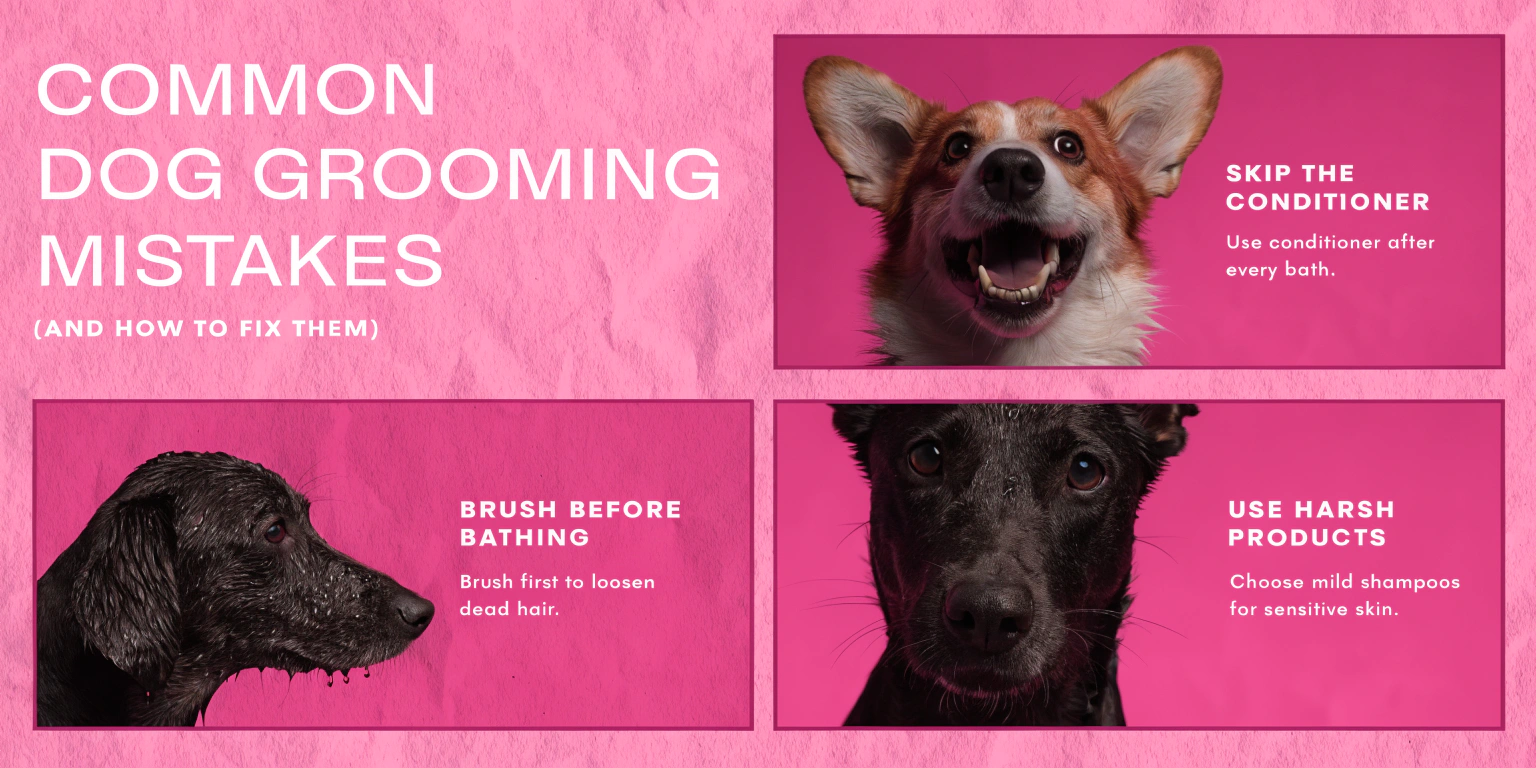
Grooming your dog at home can save money and strengthen your bond, but small mistakes can quickly turn grooming into a stressful experience for both you and your pet. Common dog grooming mistakes, such as using the wrong tools, over-bathing, or improper nail trimming, often lead to discomfort, skin issues, and anxiety in dogs—especially for first-time pet owners. In this guide, we break down the most frequent dog grooming errors and explain simple, practical fixes you can apply immediately. By avoiding these mistakes, you can ensure your dog enjoys a safe, comfortable, and stress-free grooming routine every time.
1. Mistake: Using the Wrong Grooming Tools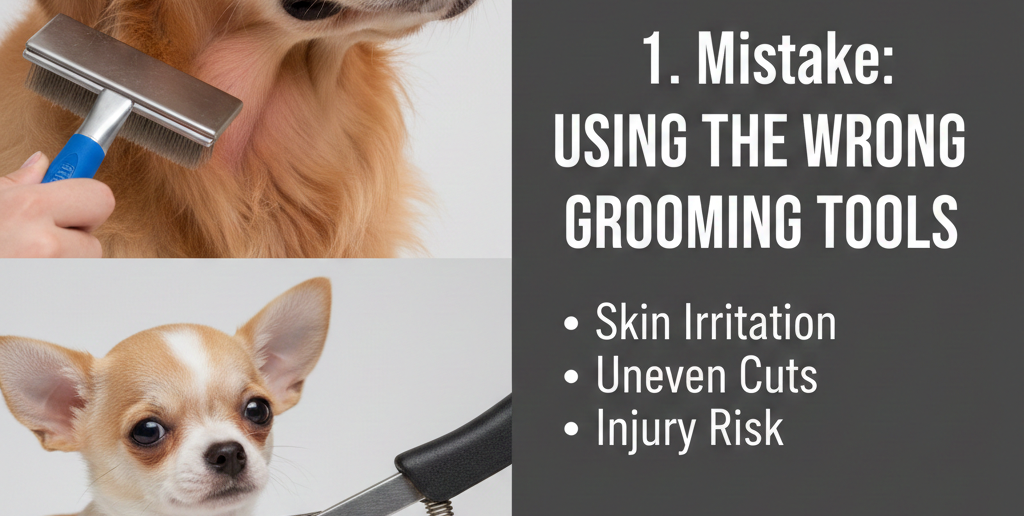
Why This Matters Now:
Using the wrong grooming tools can lead to discomfort, skin irritation, or even injury. Whether it’s choosing the wrong brush or using dull clippers, the tools you use make all the difference in your dog’s grooming experience.
How to Fix It:
Brushes: Use the right brush for your dog’s coat type. Long-haired dogs need slicker brushes, while short-haired dogs benefit from bristle brushes.
Clippers: Invest in high-quality, ergonomic clippers designed for your dog’s size and coat.
Shampoo: Always choose dog-specific shampoos to avoid skin irritation caused by harsh human shampoos.
https://www.youtube.com/watch?
2. Mistake: Bathing Too Often
Why This Matters Now: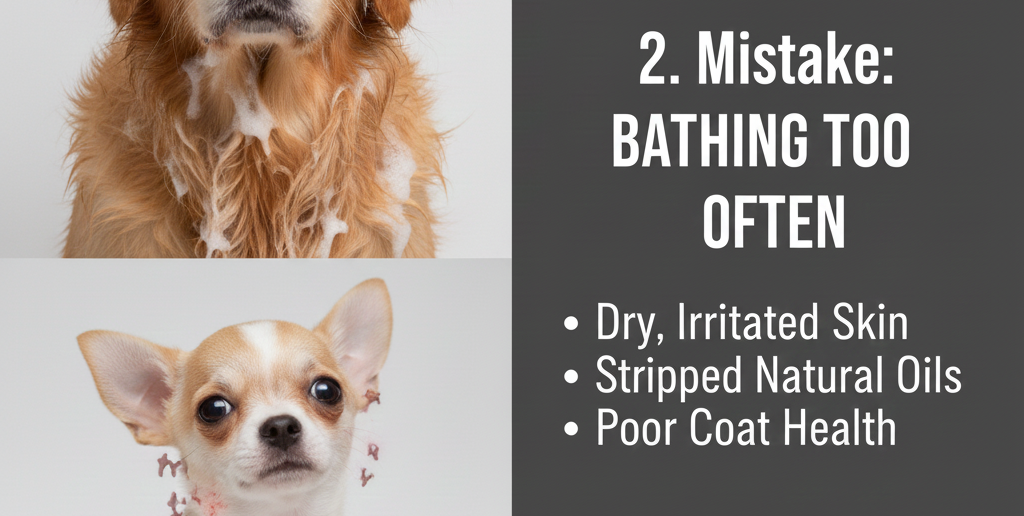
While it’s important to keep your dog clean, over-bathing can actually harm their skin and coat. Frequent bathing strips natural oils from their skin, leading to dryness, irritation, and potential skin conditions.
How to Fix It:
Bathing Frequency: Most dogs only need a bath every 4–6 weeks. If your dog isn’t visibly dirty or smelly, you may be over-bathing them.
Dog-specific Shampoo: Always use a mild, dog-specific shampoo and avoid human products that can dry out their skin.
3. Mistake: Not Brushing Your Dog Regularly
Why This Matters Now:
Failing to brush your dog regularly can lead to tangles, mats, and even skin infections. Brushing is especially important for long-haired dogs, but all dogs benefit from regular brushing to remove loose hair and prevent mats.
How to Fix It:
Set a Schedule: Aim to brush your dog at least once a week, or more frequently if they have long or thick fur.
Proper Technique: Brush gently and work through tangles slowly. Be careful around sensitive areas, like under the belly or behind the ears.
https://www.youtube.com/watch?
4. Mistake: Trimming Nails Incorrectly
Why This Matters Now:
Improper nail trimming can cause pain, bleeding, and even permanent damage to your dog’s paws. It’s easy to accidentally trim too much, especially when you’re new to nail care.
How to Fix It:
Cut Gradually: Always trim a small amount of nail at a time. If you accidentally cut the quick (the pink part of the nail), apply styptic powder to stop the bleeding.
Use Quality Clippers: Invest in sharp, high-quality nail clippers. If you’re unsure about trimming, consider using a nail grinder for smoother, safer trimming.
5. Mistake: Ignoring Your Dog’s Teeth
Why This Matters Now:
Dental hygiene is often overlooked in grooming, but poor dental health can lead to bad breath, tooth loss, and even heart disease in dogs. Regular brushing is an important part of your dog’s overall health.
How to Fix It:
Regular Brushing: Brush your dog’s teeth at least two to three times a week using dog-friendly toothpaste.
Dental Chews and Toys: Provide dental chews and toys that help clean your dog’s teeth and gums.
6. Mistake: Overlooking Skin Care After Bathing
Why This Matters Now:
Many owners focus on the bath but forget to take care of their dog’s skin afterward. Bathing can strip your dog’s skin of natural oils, leaving them dry and prone to irritation.
How to Fix It:
Moisturizing: Use a dog-safe moisturizer or conditioner after the bath to restore skin hydration.
Drying Properly: Always towel-dry your dog gently after a bath, and use a blow dryer on a low, cool setting if necessary.
Information Gain & Contrarian Analysis:
A lot of grooming guides emphasize the importance of using the right tools and following grooming techniques, but they often neglect the mental aspect of grooming. Dogs can experience anxiety or fear during grooming, and stress can negatively affect their grooming experience. To mitigate stress:
Desensitize your dog: Start with short, positive grooming sessions and gradually increase the time.
Use positive reinforcement: Reward your dog with treats and praise during and after the grooming process.
Avoid rushing: Allow your dog to get used to each grooming step at their own pace.
Unique Section: Practical Insight from Experience: How to Groom a Nervous Dog
Grooming a nervous dog requires patience and understanding. In my experience, dogs that are anxious or fearful of grooming respond well to gradual desensitization. Start with simply brushing them for short sessions, followed by a treat. Over time, add more grooming steps, but always ensure that the process is slow and positive. If your dog shows signs of stress, such as panting or trying to escape, take a break and try again later. Consistency is key to building your dog’s comfort and trust.
FAQ
What are the most common dog grooming mistakes?
Skipping regular brushing, using human products, and trimming nails too short.
How do I prevent matting in my dog’s coat?
Brush regularly, detangle knots promptly, and keep hair trimmed if needed.
How do I stop my dog from being afraid of grooming?
Use treats, gentle handling, and gradually introduce grooming tools.
How often should I trim my dog’s nails?
Trim every 3–4 weeks or when nails start touching the ground.
What is the best way to care for my dog’s skin after a bath?
Dry thoroughly, brush gently, and apply dog-safe moisturizer if skin is dry.
Can I use baby wipes to clean my dog’s paws?
Occasionally yes, but choose pet-safe wipes to avoid irritation.
What are the signs that my dog’s coat needs grooming?
Tangles, mats, excessive shedding, dull fur, or an unpleasant odor.
Conclusion:
By avoiding these common grooming mistakes, you can ensure that your dog’s grooming sessions are as comfortable and effective as possible. Remember to take your time, use the right tools, and most importantly, be patient with your dog. With a little care and attention, grooming can become a stress-free bonding experience for both of you. Regular grooming not only keeps your dog looking great but also ensures their overall health and well-being.
Internal & External Links Suggestions:
Dog Grooming Checklist: Complete Guide for Weekly, Monthly & Annual Care
Dog Bathing at Home: Step-by-Step Guide for a Stress-Free Bath
External Link: American Kennel Club: Dog Grooming Tips


