Introduction
Dog paw, nail, and coat health play a vital role in your furry friend’s overall well-being. Healthy paws allow dogs to move comfortably and safely, strong nails prevent pain or injuries, and a shiny, well-groomed coat protects their skin while reflecting their nutritional status. However, many dog owners overlook these areas, which can lead to discomfort, infections, and other preventable health issues. Recognizing common paw, nail, and coat problems early, and knowing how to prevent them, ensures that your dog remains active, happy, and healthy.
Paw problems are among the most frequent issues faced by dogs. Their paws endure daily wear and tear, exposure to rough surfaces, extreme temperatures, chemicals like road salt, and occasional trauma. Common issues include cracked pads, burns, cuts, infections, and irritation caused by allergens or debris. Dogs with paw problems may limp, lick their paws excessively, or even refuse to walk comfortably. Regular paw inspection, cleaning after walks, and using paw balms or protective booties can prevent these problems and maintain soft, healthy pads.
Nail problems are another area of concern. Overgrown nails can cause discomfort, difficulty walking, and even lead to joint stress. Long nails click against hard floors and may curl into the paw pads, causing pain or infections. Nail trimming can be a stressful task for both the owner and the dog, but using proper techniques, ergonomic clippers, and trimming gradually ensures safety and reduces stress. Dogs that receive regular nail care are less likely to experience injuries, broken nails, or gait problems.
Why Preventing Paw, Nail & Coat Problems Matters
Why This Matters Now:
Problems like cracked paw pads, overgrown nails, or matted coats are often overlooked. Regular inspection and care reduce the risk of infections, discomfort, and long-term joint or mobility issues.
https://www.youtube.com/watchv=0xev1EObny4&pp=ygUxV2h5IFByZXZlbnRpbmcgUGF3IE5haWwgYW5kIENvYXQgUHJvYmxlbXMgTWF0dGVycw%3D%3D
1. Paw Problems & Prevention
Cracked or dry paw pads: Moisturize with dog-safe paw balm.
Cuts, abrasions, or burns: Avoid hot pavements, salted roads, or rough terrain.
Infections: Clean paws after walks and check for redness or swelling.
Tip: Inspect paws daily and wipe them after outdoor walks.
https://youtu.be/9A269-o0yv0
2. Nail Issues & Maintenance
Overgrown nails: Can cause pain, limping, or joint strain.
Splitting or cracked nails: Avoid cutting nails too short or walking on rough surfaces without protection.
Tip: Trim nails every 3–4 weeks and file sharp edges for safety.
3. Coat Problems & Care Tips
Matted fur: Causes discomfort and skin infections. Regular brushing prevents tangles.
Dull or dry coat: Indicates poor nutrition or over-bathing. Use dog-specific shampoo and a healthy diet.
Shedding & hair loss: Seasonal shedding is normal, but excessive hair loss may require vet attention.
Tip: Groom regularly and use the right brush for your dog’s coat type.
4. Seasonal Concern
Winter: Dry pads, cracked nails, cold-induced skin irritation.
Summer: Hot pavement burns, over-shedding, skin rashes.
Rainy season: Mud accumulation leading to fungal infections.
Tip: Adjust care routines for different weather conditions.
5. When to Visit the Vet
Persistent limping or paw licking
Redness, swelling, or discharge from nails or paws
Severe coat issues like bald patches, sores, or infections
Tip: Early vet visits prevent complications and long-term discomfort.
Information Gain & Contrarian Analysis:
Most guides focus solely on grooming techniques, but prevention of problems is equally important. Understanding the signs of issues allows for proactive care rather than reactive treatment.
Unique Section: Myth vs. Reality: Paw & Coat Care
Myth: Dogs’ nails only need cutting if they are long.
Reality: Even short nails can cause joint strain and discomfort if not regularly filed and maintained.
FAQ
Q1: How can I tell if my dog’s paws are healthy?
Healthy paws are soft, not cracked, free of swelling, redness, or discharge.
Q2: How often should I check for matting?
Check daily for long-haired breeds; at least 2–3 times a week for short-haired dogs.
Q3: Can over-bathing cause coat problems?
Yes, excessive bathing strips natural oils, causing dryness and dullness.
Q4: How do I prevent fungal infections on paws?
Clean paws after walks, dry thoroughly, and avoid muddy or wet environments.
Q5: What’s the best way to prevent nail splitting?
Trim gradually, avoid cutting too close to the quick, and keep nails filed smooth.
Conclusion:
Preventing paw, nail, and coat problems requires consistent care, proper grooming, and observation. With daily checks, regular grooming, and seasonal adjustments, you can maintain your dog’s health and comfort while avoiding common issues.
Internal & External Links Suggestions:
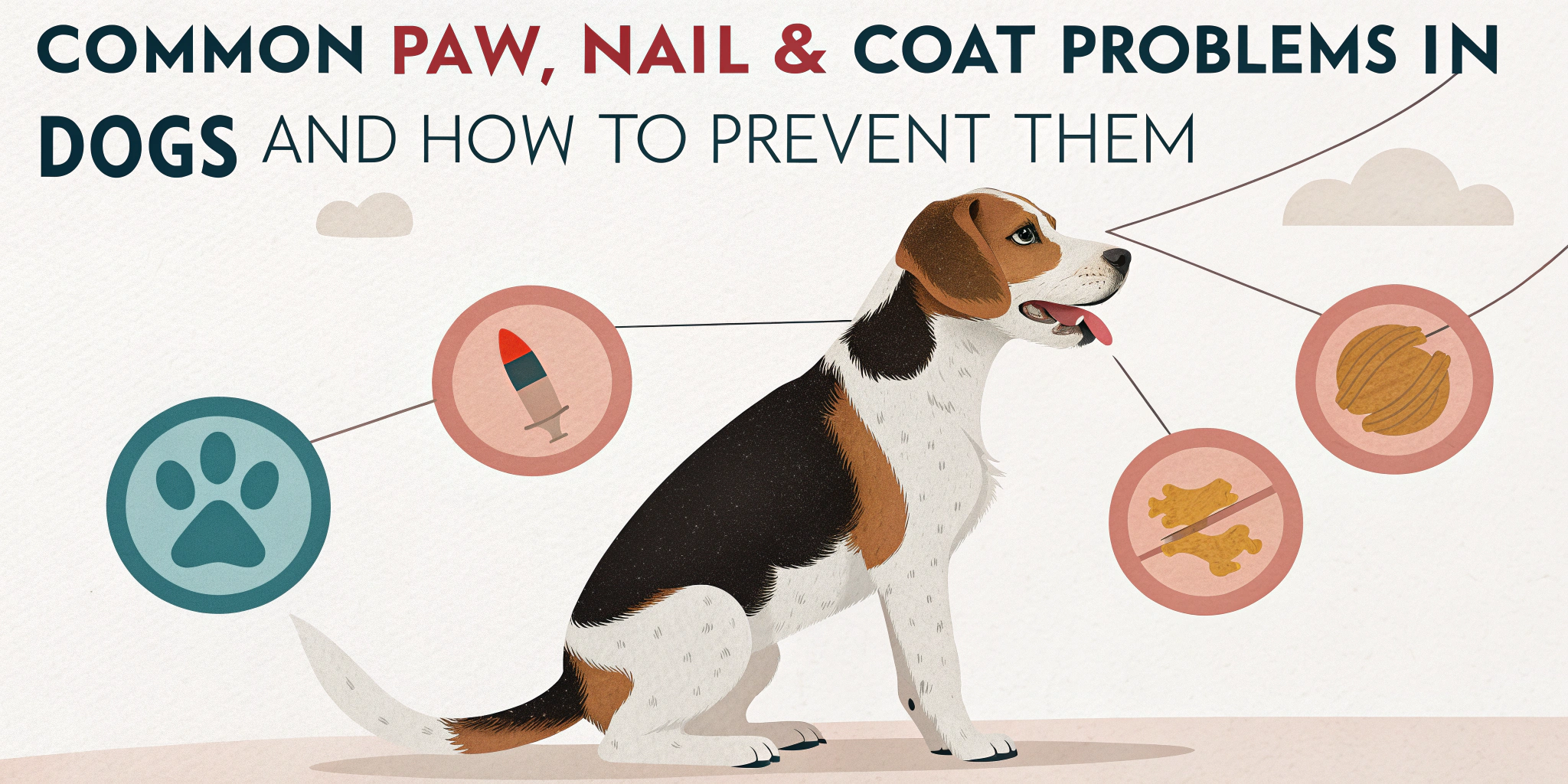
Common Paw, Nail & Coat Problems in Dogs
External Link: American Kennel Club: Dog Health Tips